
Core cleaning questions
how to clean airbrush, how to clean an airbrush, clean airbrush after use
1,430 searches/mo
Airbrush cleaning guide
A practical guide to cleaning an airbrush after use, between colors, with isopropyl alcohol, water, acetone, dried paint, clogged nozzles, and clear coat.
Core cleaning questions
how to clean airbrush, how to clean an airbrush, clean airbrush after use
1,430 searches/mo
Solvent decisions
isopropyl alcohol, rubbing alcohol, water, acetone
620 searches/mo
Troubleshooting
dried paint, clogged airbrush, nozzle, needle, deep clean
220 searches/mo
No-clean buying intent
no clean airbrush, no clean airbrush kit, easy to clean airbrush
390 searches/mo
Clear coat use cases
airbrush clear coat, 2K clear coat, airbrush over clear coat
940 searches/mo
The highest-volume queries are not asking for a product first. They are asking how to avoid dried paint, clogs, and wasted time after a painting session.
Solvent questions are a large keyword cluster because one wrong cleaner can damage parts or make paint harder to remove.
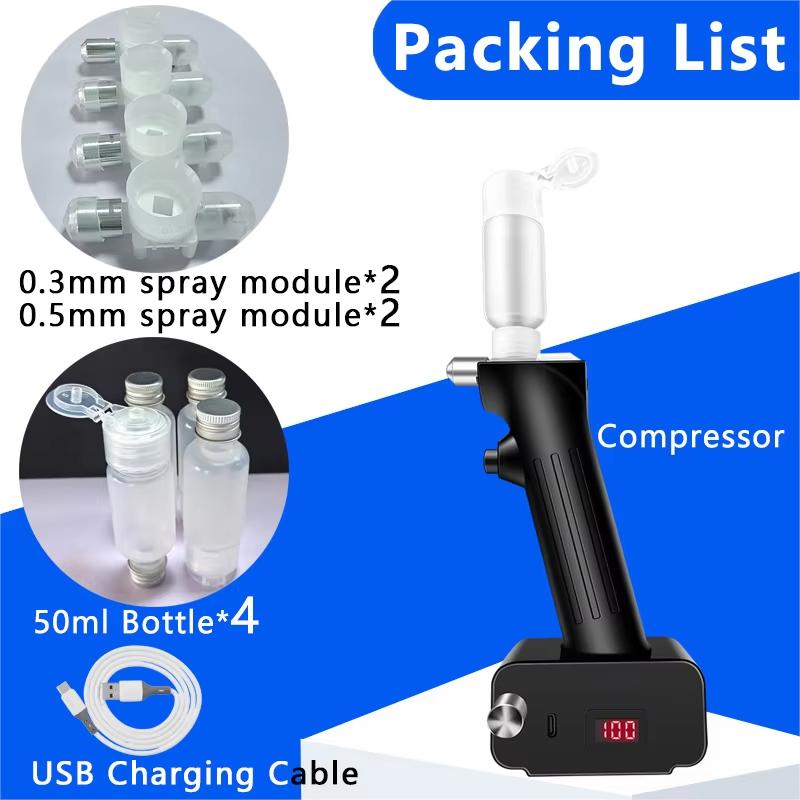
The commercial intent is clear: buyers want fewer interruptions, not magic. Replaceable spray modules, bottles, and disposable nozzles reduce the number of times a small clog ruins momentum.
Clear coat keywords show both informational and buying intent. The page should answer them carefully because clear coat and 2K products can be less forgiving than hobby acrylic paint.
This is the maintenance routine behind the guide schema. It is intentionally conservative: clean early, use compatible liquids, and replace tiny consumables when cleaning them costs more time than the part.
Remove leftover paint before adding cleaner so the first flush does not push thicker paint deeper into the nozzle path.
Use water for fresh water-based paint, isopropyl alcohol or acrylic cleaner when compatible, and product-specific cleaner for clear coat.
A tiny ring of dried paint on the needle can cause sputter, so wipe gently from the thick end toward the tip.
Inspect for dried paint or clear coat residue, then clean or replace the nozzle based on the part design.
Spray on scrap until the output is clean and even before returning to the project surface.
The kit is not a promise that paint never needs care. It is a simpler way to keep the compressor, bottles, spray modules, and disposable nozzles ready so cleaning does not become the center of every session.
These questions mirror the cleaning choices most buyers check before they decide whether a no-clean airbrush kit is worth it.
Flush the cup with the right cleaner for your paint, spray until it runs clear, wipe the needle tip, and clean the nozzle path before paint can dry. A no-clean kit reduces how often you need to stop for that full routine, but it does not replace basic care.
Isopropyl alcohol can help with many water-based acrylic residues, especially during quick flushes, but it is not universal. Check the paint maker and airbrush maker guidance first, and avoid soaking seals or parts that are not solvent-safe.
Rubbing alcohol is often isopropyl alcohol diluted with water, so it may work for light acrylic residue. It can also thicken or gum up some paints, so test gently and flush with the cleaner recommended for your paint.
Water is useful for fresh water-based paint and between-color rinses, but it is usually not enough once paint dries, clear coat cures, or binder builds up in the nozzle. Use water early, then switch to the correct cleaner when residue remains.
Acetone is strong and can damage seals, plastic parts, finishes, and coatings. Use it only when the airbrush maker says the parts are compatible, keep exposure short, and never treat it as a routine cleaner.
Soften the dried paint with the cleaner recommended for that paint type, then clean the nozzle and needle gently instead of forcing parts apart. Disposable nozzles help because a badly dried spray path can be replaced instead of rescued every time.
Start with a cleaner flush, then inspect the needle tip, nozzle, and paint cup. Most clogs come from dried paint, thick paint, or partially cleaned nozzles, so solve the residue first before increasing pressure.
Remove the nozzle only if your airbrush design allows it, soak briefly in compatible cleaner, and use a soft brush or nozzle tool without scratching the opening. If the nozzle is disposable, replacing it can be faster and safer than over-cleaning it.
Pull the needle carefully, wipe from the thick end toward the tip, and avoid bending the point. A tiny dried ring on the needle tip can cause sputter, so check it during color changes and after longer sessions.
Empty the cup, rinse or flush with the right cleaner, spray until clear, then test on scrap before switching colors. Extra bottles and replaceable spray modules make color changes less dependent on a full teardown.
Deep clean when spray quality changes, paint dries inside, clear coat residue remains, or a session used many colors. If you paint often, a no-clean workflow can move more of the work to replaceable consumables.
For fresh acrylic paint, flush early with water or acrylic airbrush cleaner, then wipe the needle and cup. Once acrylic dries, use compatible cleaner to soften it before working on the nozzle.
If the paint is water-based and still wet, water may be enough for a temporary flush. If residue remains, stop and get the right cleaner instead of using random solvents that can damage seals or react with paint.
Clean the cup first, flush through the nozzle, wipe the needle tip, and check the cup-to-nozzle channel. Gravity-feed designs make the paint cup easy to reach, but dried paint can still hide near the nozzle.
No. No-clean means the workflow is designed to reduce messy teardown by using replaceable modules, bottles, or nozzles. You should still wipe exposed paint, store parts cleanly, and follow the paint safety rules.
It helps replace some teardown and recovery work by using replaceable spray modules, bottles, and disposable nozzles. It does not replace safe paint handling, quick wipe-downs, or proper storage after a session.
They are useful when the cost of cleaning a tiny clogged part is higher than replacing it. They are especially practical for frequent color changes, hobby projects, and sessions where dried paint clogs happen often.
Yes, many clear coats can be sprayed with an airbrush when thinned and sprayed according to the product instructions. Clear coat can be harder to clean than acrylic paint, so plan the cleaner, ventilation, and safety gear before spraying.
Usually yes after the clear coat has cured and the surface is prepared for the next layer. Follow the clear coat instructions for cure time, sanding or scuffing, and compatibility with the next paint.
Flush immediately with the cleaner specified for that clear coat, and follow the safety sheet. 2K clear coats can involve hazardous hardeners, so use proper respirator protection, ventilation, and disposal instead of treating them like regular hobby paint.